Earthquake Myths

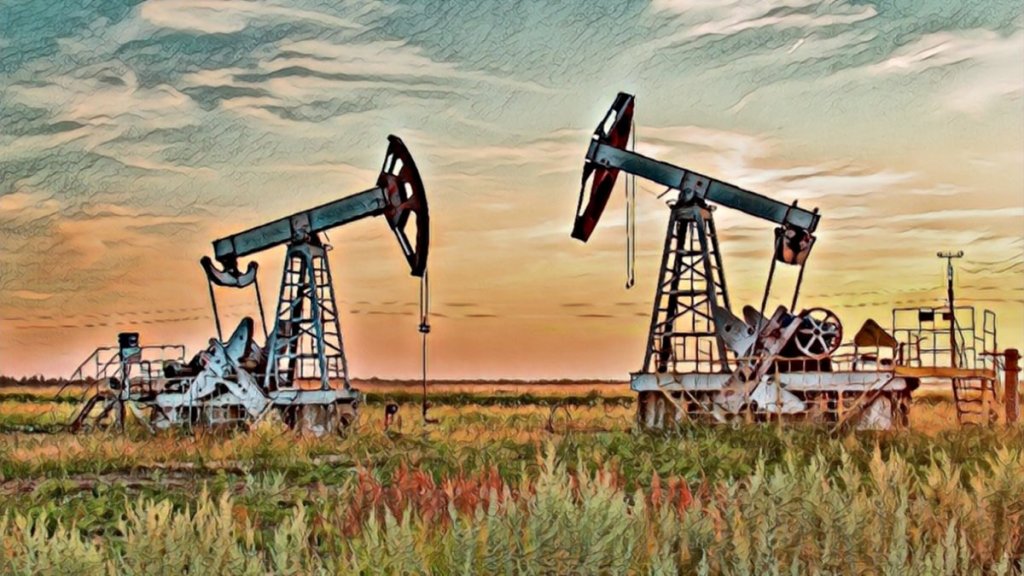
Oil pumpjacks in Oklahoma

In November 2011 a new earthquake swarm started in central Oklahoma, when the Wilzetta Fault moved. Even in mid-2026 earthquakes still occur in central Oklahoma, although there have not been any large ones in the last few years.

Geologists closely watch the Meers Fault in southwest Oklahoma, as well as the New Madrid Fault in the southeast tip of Missouri. These two fault zones can produce very large mid-continent earthquakes. The pressure point between these two is the Wilzetta. All reputable geologists confirm that these are naturally occurring events.

When the Wilzetta moved in 2011, it set off movement all around. Fifteen years later that energy still has not abated. Think of it like balls colliding on a pool table. They ping around the table, bouncing into each other and off the banks until the energy subsides. Was the Wilzetta a precursor to movement from either the Meers or the New Madrid? The answer is most likely yes, but no one knows Mother Nature’s time fame.

When this latest earthquake swarm started in 2011, some property owners found themselves squaring off against insurance companies and/or oil and gas companies. Looking to avoid paying property damage claims, insurance companies touted an obscure non-peer reviewed white paper that postulated the possibility that oil and gas shallow-depth fracking might aggravate fault zones. Again, this was an unproven theory, but it was enough for companies to deny insurance claims. Property owners, who sued oil and gas companies directly over damages caused by the earthquakes, make the mistake of citing fracking. Those cases were quickly lost, because there is no known fracking in central Oklahoma. Fracking is not needed in that area in order to extract oil and gas.

The geology of Oklahoma is why so much oil and gas is found there. Geologists have mapped fault zones and rock formations in that region since the 1880s. In fact, oil was known to be present in the area as early as the 1830s. As the petroleum industry came into being in the late 19th century, scientists scoured the landscape first as Indian Territory, next as Oklahoma Territory, and finally in 1907 as the State of Oklahoma for scientific signs that would lead to the discovery of oil and gas. That included mapping earthquake fault zones.

Are there small man-made earthquakes? Yes. Quarry blasting and other mining that involves demolition can create minor earthquakes on the scale of 1-2 magnitude. Also, shallow fracking in shale formations is known to cause shaking under magnitude 2, which is the equivalent of a freight train rumbling down the prairie.

Are there large man-made earthquakes? So far, the science gives a resounding no. Oil and gas mining does not destabilize fault zones. If that were the case, drilling deep water wells would create the same affect, which they do not.

Linking oil and gas mining with major earthquakes would be like saying that NASA shifted the orbit of the moon by crashing booster rockets there over fifty years ago. Obviously, that did not happen. It is ridiculous.


Watch out for email scams

Know how to read website and email addresses

Authors need to be aware of a current scamming effort aimed directly at them. Lots of authors have gotten random emails from so-called publicists and marketing agents, offering to help with online book promotions. While some may be legitimate, the bulk are not.

The first sign of a possible scam is the use of third-party emails, such as Gmail, Hotmail, or Yahoo. Real businesses use “domain” email for initial outreach and formal business. At some point, after a relationship has been established, they may switch to Gmail or Yahoo for quicker interactions via mobile devices. Just remember that third-party email is almost never used for an initial contact.

Domain used for an email must match the website of the business in question, such as: contact@__.com. When larger businesses have several website domains, they almost always show them on their primary website to verify which ones belong to them. This is now standard business practice.

Another type of email scam relies heavily on using a slightly different business domain. For example, instead of “amazon.com” it might look like “amzn26.net.” That’s not Amazon. A lot of email scams now try to trick people into logging into fake websites that look like the real thing.

What happens is hackers somehow get hold of email client lists for online business sites, both platforms and retailers. They then set up fake login panels with fake landing pages that on the surface look like the real site in question. Again, the difference will be that the domain is slightly different. It could also use a different extension. The main business domain extensions are dot-org, dot-com, and dot-net.

Logging in to a fake website gives scammers your real email and password, which they then use to access your account. — In other words, you just gave them your login.

Security exports advise that you never “click” on a link from inside an email. While there are still some circumstances when a business sends a link in an email to verify who you are, those links should never take you to a login page where your information could be compromised. These days, most legitimate businesses and sites send one-time pass-codes via phone text messages or emails. You get the pass-code, which is usually a 5-9 digit number, input that in the real login panel, and proceed.

Instead of clicking on email links, go directly to the site in question and login from the front page. If there are issues with your account, the real site should show a notice. If no notice appears, then the email was a scam. At that point you should contact the site, via customer support online chat or email, to ask if there is a problem. If they say no, then report the email scam and be sure to give the email address from which it was sent.

Eager to increase book sales, authors are always looking for good marketing tools and promotion sites. However, do not engage with anyone who sends a direct email. First, how did they get your private email? Most authors use third-party emails for online contacts, such as Gmail, but never publicly post their private email addresses.

The first clue of a scam is that someone has your private email.

The best advice I can give is for authors to share information about good marketing companies with which they have worked. If you find a new (or new to you) marketing website with associated social media presence, then do a little homework to verify its legitimacy.

Remember, what scammers want is your money and your personal information. Do not give them either one.

Cosmic Sculpture

Cosmic Sculpture

The award-winning science fiction and fantasy anthology COSMIC SCULPTURE by Terri Branson includes fourteen short stories plus the DRAGON’S DEN science fiction novel. Available in print, ebook, and now audiobook at Apple Books. Read more and find sales links at: https://www.terribranson.com/cosmicsculpture.html | #cosmicsculpture #terribranson #sciencefiction #fantasy #paranormal #anthologies #shortstories #audiobooks

Dragon’s Den

Dragon's Den

Can an elite soldier, serving on a distant and icy world, embrace his true nature in time to survive a deadly attack? — Read the science fiction novel DRAGON’S DEN by Terri Branson | Available in Print, eBook, and Apple Audiobook | Read an excerpt, read reviews, find sales links, and more at https://www.terribranson.com/dragonsden.html | #dragonsden #scienceficion #terribranson #audiobooks #dfpbooks

Musk Rain

Musk Rain

A sexy martial artist. A conniving oil man. A ghost on a mission. And a young woman caught in the middle of it all. — Read the paranormal romance MUSK RAIN by Terri Branson | 5-STARS from NN Light’s Book Heaven, CoffeeTime Romance, Goodreads, and more! | Available in Print, eBook, and Apple Audiobook | Read an excerpt, read reviews, find sales links, and more at https://www.terribranson.com/muskrain.html | #muskrain #terribranson #romance #audiobooks #dfpbooks #paranormalromance