
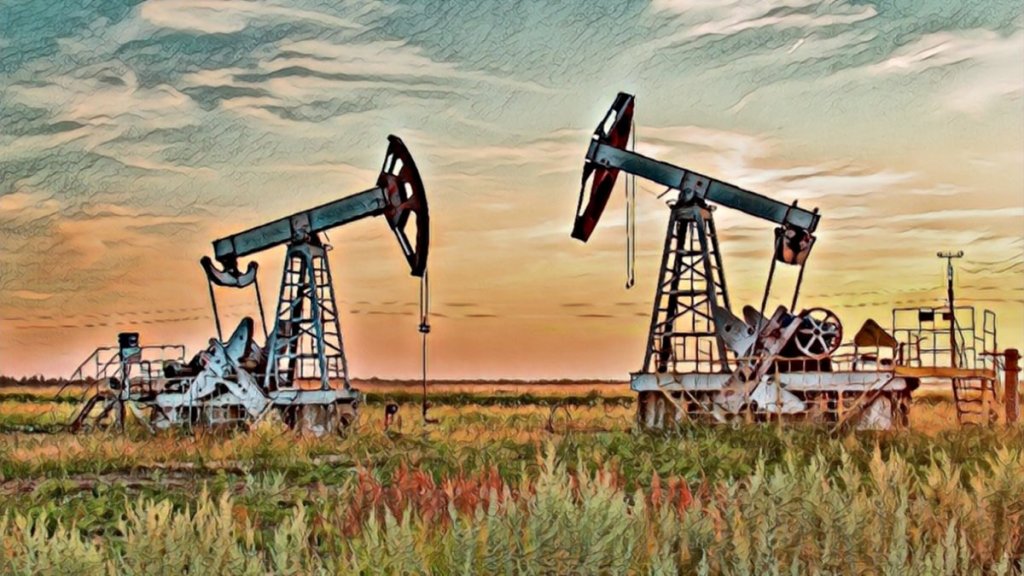
In November 2011 a new earthquake swarm started in central Oklahoma, when the Wilzetta Fault moved. Even in mid-2026 earthquakes still occur in central Oklahoma, although there have not been any large ones in the last few years.
Geologists closely watch the Meers Fault in southwest Oklahoma, as well as the New Madrid Fault in the southeast tip of Missouri. These two fault zones can produce very large mid-continent earthquakes. The pressure point between these two is the Wilzetta. All reputable geologists confirm that these are naturally occurring events.
When the Wilzetta moved in 2011, it set off movement all around. Fifteen years later that energy still has not abated. Think of it like balls colliding on a pool table. They ping around the table, bouncing into each other and off the banks until the energy subsides. Was the Wilzetta a precursor movement to the Meers or the New Madrid? The answer is most likely yes, but no one knows Mother Nature’s time frame.
When this latest earthquake swarm started in 2011, some property owners found themselves squaring off against insurance companies and/or oil and gas companies. Looking to avoid paying property damage claims, insurance companies touted an obscure non-peer reviewed white paper that postulated the possibility that oil and gas shallow-depth fracking might aggravate fault zones. Again, this was an unproven theory, but it was enough for companies to deny insurance claims. Property owners, who sued oil and gas companies directly over damages caused by the earthquakes, make the mistake of citing fracking. Those cases were quickly lost, because there is no known fracking in central Oklahoma. Fracking is not needed in that area in order to extract oil and gas.
The geology of Oklahoma is why so much oil and gas is found there. Geologists have mapped fault zones and rock formations in that region since the 1880s. In fact, oil was known to be present in the area as early as the 1830s. As the petroleum industry came into being in the late 19th century, scientists scoured the landscape first as Indian Territory, next as Oklahoma Territory, and finally in 1907 as the State of Oklahoma for scientific signs that would lead to the discovery of oil and gas. That included mapping earthquake fault zones.
Are there small man-made earthquakes? Yes. Quarry blasting and other mining that involves demolition can create minor earthquakes on the scale of 1-2 magnitude. Also, shallow fracking in shale formations in other regions is known to cause shaking under magnitude 2, which is the equivalent of a freight train rumbling down the prairie.
Are there large man-made earthquakes? So far, the science gives a resounding no. Oil and gas mining does not destabilize fault zones. If that were the case, drilling deep water wells would create the same affect, which they do not.
Linking oil and gas mining with major earthquakes would be like saying that NASA shifted the orbit of the moon by crashing booster rockets there over fifty years ago. Obviously, that did not happen. It is ridiculous.

